





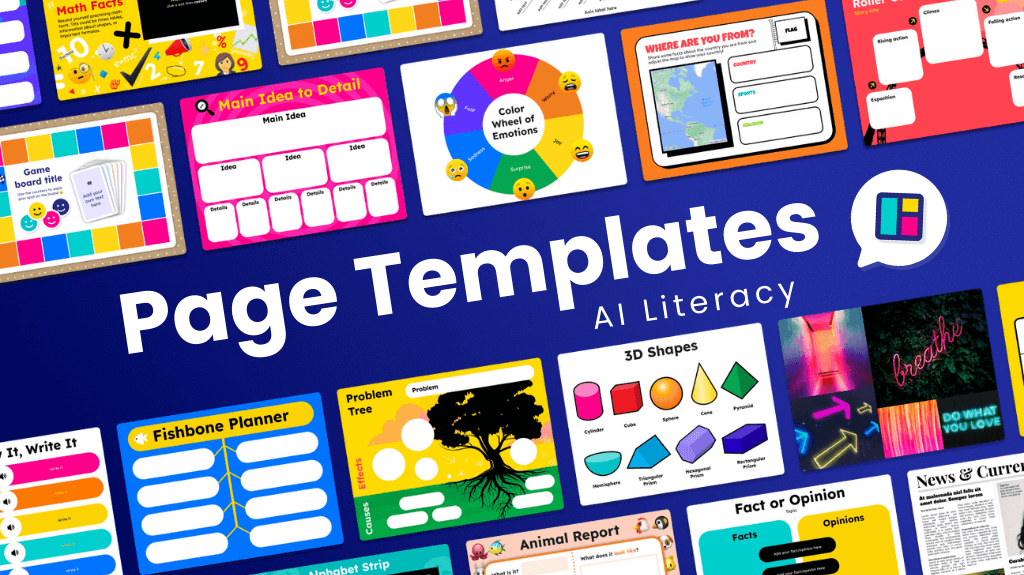
Help students build AI literacy with new interactive page templates in Book Creator.
Artificial Intelligence (AI) is no longer just a futuristic concept, it’s here, shaping how we learn, work, and communicate today. For students, developing AI literacy is an essential future ready skill.
To support teachers in this important work, we’re excited to announce a new collection of AI Literacy Page Templates designed to help students explore, understand, and reflect on the role of AI in their lives. These interactive templates make it simple for teachers to integrate AI conversations into their lessons, giving students structured opportunities to build skills in critical thinking, creativity, and ethical awareness.
Why focus on AI literacy?
AI is woven into nearly every aspect of modern life, from recommendation systems on social media to generative tools in the classroom. While students may feel comfortable using AI, many lack the skills to evaluate how it works, when it’s helpful, and when it might mislead.
Here’s why AI literacy matters:
- Digital Citizenship: Students must learn how to interact responsibly in a world where AI influences information, communication, and decision-making. Understanding bias, privacy, and ethical use of AI is a cornerstone of being a responsible digital citizen.
- College and Career Readiness: AI tools are already transforming workplaces. From healthcare to engineering to marketing, students who can think critically about AI will be better prepared to thrive in college and careers that demand innovation, problem-solving, and adaptability.
- Empowered Learners: AI literacy gives students agency. Instead of being passive consumers, they become creators, evaluators, and decision-makers, skills that transfer across every subject and life situation.
By equipping students with AI literacy, we are preparing them not only for success in the classroom but also for their roles as thoughtful, ethical participants in society and the workforce.
Features of the new AI literacy templates
These templates are flexible enough to use across subjects while still offering targeted prompts and structures to guide student learning. Here are some highlights:
Rules for Using AI at School: Create a Policy
Students aren’t just AI users, they can also be AI policymakers. In this template, learners collaborate to identify what AI can help with, what it shouldn’t be used for, and then write three classroom rules for responsible AI use. This activity empowers students to take ownership of ethical guidelines while aligning directly with digital citizenship skills.
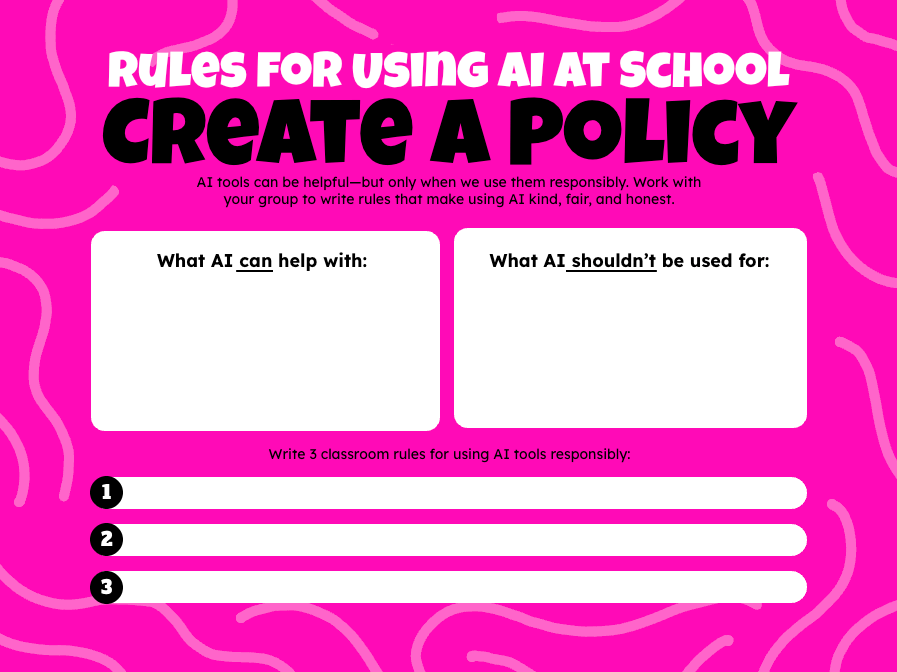
Empower students to shape ethical technology use with the ‘Create a Policy’ template, where they write classroom rules for responsible AI use—building digital citizenship and leadership skills.
Write an AI Prompt
Prompt writing is one of the most practical skills students can learn. This template breaks the process down into context, role, task, tone, output, and constraints. By the end, students craft a polished prompt and reflect on how each choice shapes the AI’s response, building both communication skills and AI fluency.
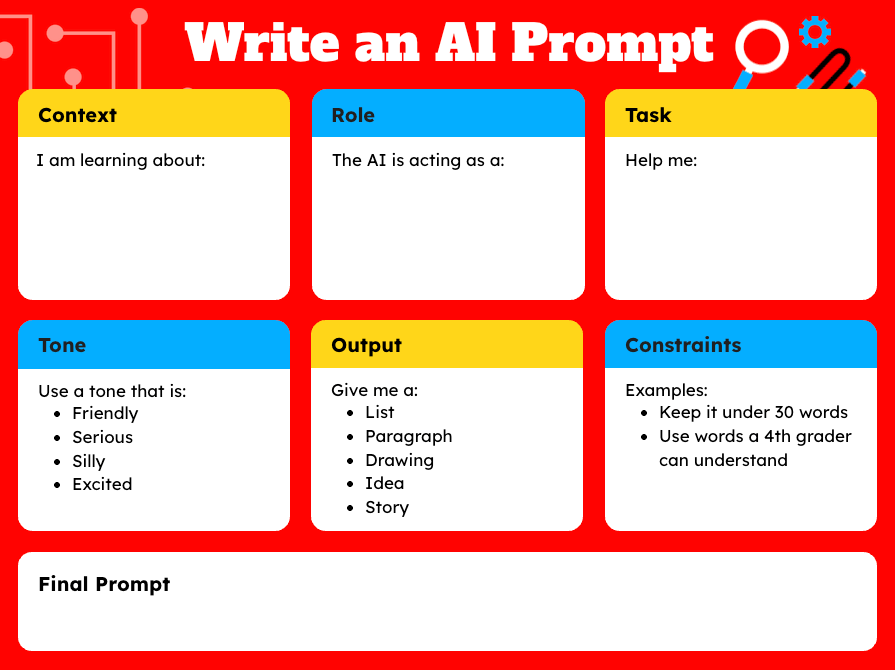
Teach students the art of prompt writing with the ‘Write an AI Prompt’ template. Learners practice setting context, role, tone, and constraints to create effective AI prompts, an essential skill for college and career readiness.
Recognizing AI’s Role in Everyday Life
AI isn’t just in futuristic robots, it’s embedded in everyday tools like YouTube recommendations, typing suggestions, and web searches. With this template, students analyze common digital tools and determine where AI is at work. By reflecting on how they know AI is being used, they build awareness of both its benefits and hidden influence.
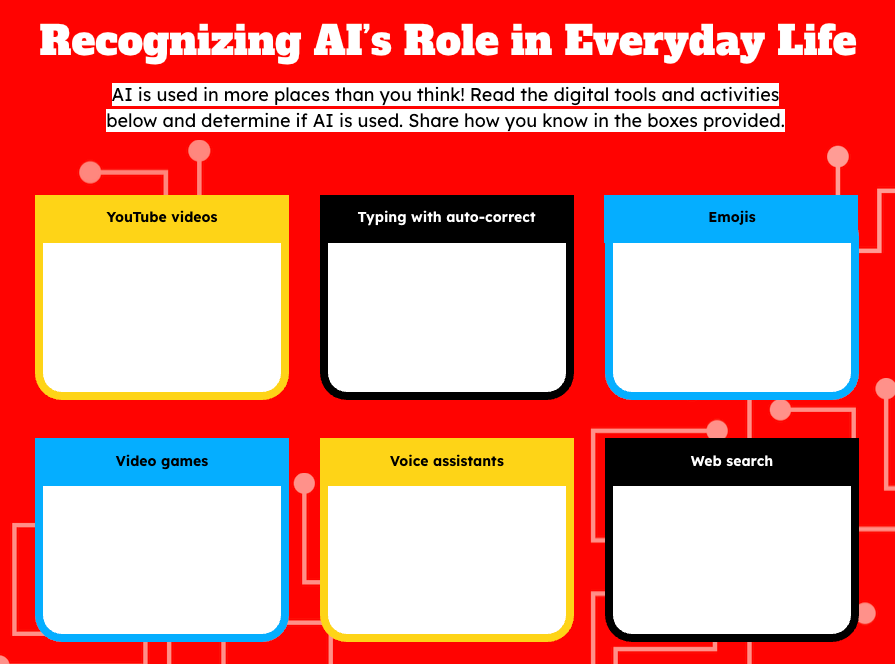
Make AI relevant with the ‘Recognizing AI’s Role in Everyday Life’ page template, where students identify AI in tools like YouTube, voice assistants, and web searches. A practical way to connect AI literacy with digital citizenship.
AI-Illustrated Short Story Planner
This template blends creativity with critical AI use. Students plan a short story with a clear beginning, middle, and end, then generate AI-created images to illustrate each section. Along the way, they reflect on how AI visuals support, or sometimes distort, their intended meaning, sparking conversations about authorship, originality, and creative choices.
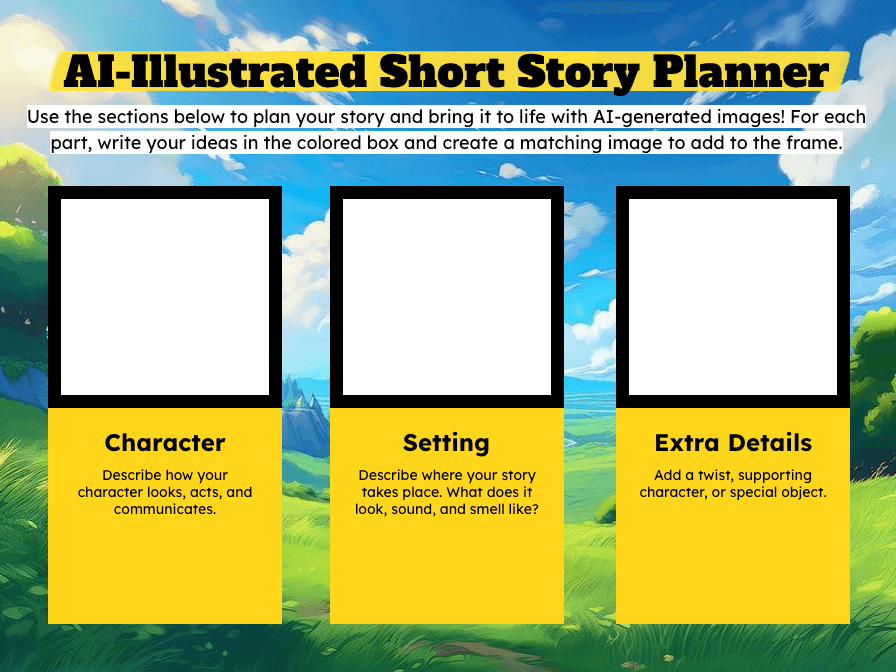
Unleash creativity with the ‘AI-Illustrated Short Story Planner’ template, where students design a story and use AI-generated images to bring it to life. A perfect activity for combining literacy, creativity, and AI awareness.
Using AI for Visualizing History (Additional Subject Area Templates)
This template bridges history learning with AI awareness. Students choose an important moment in history, describe it in detail, and then generate an AI image to match. Afterward, they evaluate how well the AI’s output represents the event, opening up conversations about accuracy, perspective, and how AI can both help and distort historical understanding.
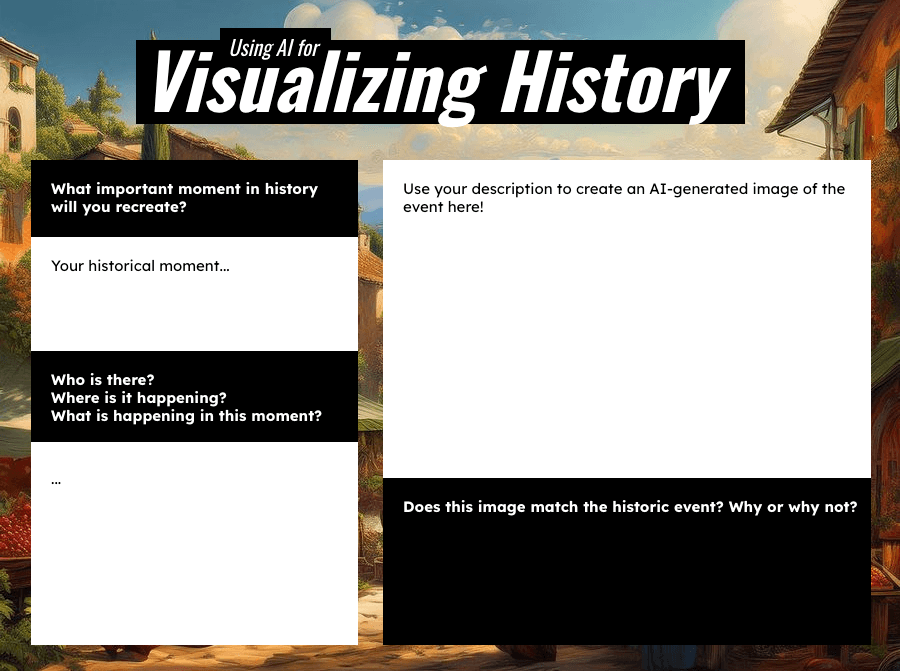
Connect history and AI literacy with the ‘Visualizing History’ template, where students describe historical events, create AI-generated images, and reflect on accuracy and perspective.
How these templates support learning across the curriculum
While the primary focus of these templates is AI literacy, they also reinforce core academic skills. Students practice reading and writing through prompts and reflections, develop speaking and listening through peer discussions, and strengthen critical thinking by analyzing AI outputs.
Most importantly, these activities connect directly to:
- Digital Citizenship: Students reflect on respect, fairness, and responsibility when using AI.
- College and Career Readiness: Activities like policy-making, prompt writing, and evaluating AI outputs prepare learners for the AI-driven workforce.
- Content Learning: From storytelling to history to everyday media literacy, these templates fit seamlessly into existing curriculum.
Ready to start building AI literacy?
The new AI Literacy Page Templates are now available in the template library. Just search “AI” to find them and start weaving AI conversations into your lessons.
With these templates, you can help your students move beyond passive use of AI into active, critical, and creative engagement. By guiding them to question, reflect, and experiment, you’ll be preparing them not just for the classroom, but for college, careers, and a future where AI is everywhere.

Get Book Creator for your school!
- Upgraded accounts for all your teachers
- Implementation plan to help with rollout
- PD support
- Analytics & admin dashboard
Related posts
-
 13 August, 2025
 -
 11 October, 2024
 -
 14 November, 2024
 -
 22 September, 2025
 -
23 September, 2025
-
 12 September, 2024
 -
 26 February, 2025
 -
25 September, 2025